

Training: Drone Operations Specialist
Learn how to plan, analyze, and oversee professional drone operations, taking into account regulatory, weather, and operational constraints.
Drone Operations Specialist Training
The role of the Drone Operations Officer is to serve as a liaison between drone pilots, operators, and regulatory authorities. They help ensure the smooth execution and safety of drone missions.
Discover the exclusive OpsForm Drone Operations Agent training program and learn how to develop mission plans, risk assessments, and operational decisions (GO/NO GO) for field teams and aviation authorities.
Drone Operations Officer: The Challenges
The growth of drone operations, particularly in urban and industrial settings, requires a level of preparedness and safety equivalent to that of traditional aviation.
In this context, the Drone Operations Officer plays a key role in risk management and ensuring mission reliability. He or she is involved both before and during the operation to plan, secure, and optimize each mission.
Drawing on a variety of sources (weather data, regulations, on-site constraints), it builds a comprehensive overview that enables the anticipation of risks and ensures operational compliance.
Analysis, foresight, organization, and decision-making thus become essential skills for thriving in a demanding and ever-changing environment.
With its practical, hands-on approach, this training program will help you develop a comprehensive operational framework that can be directly applied in real-world situations.
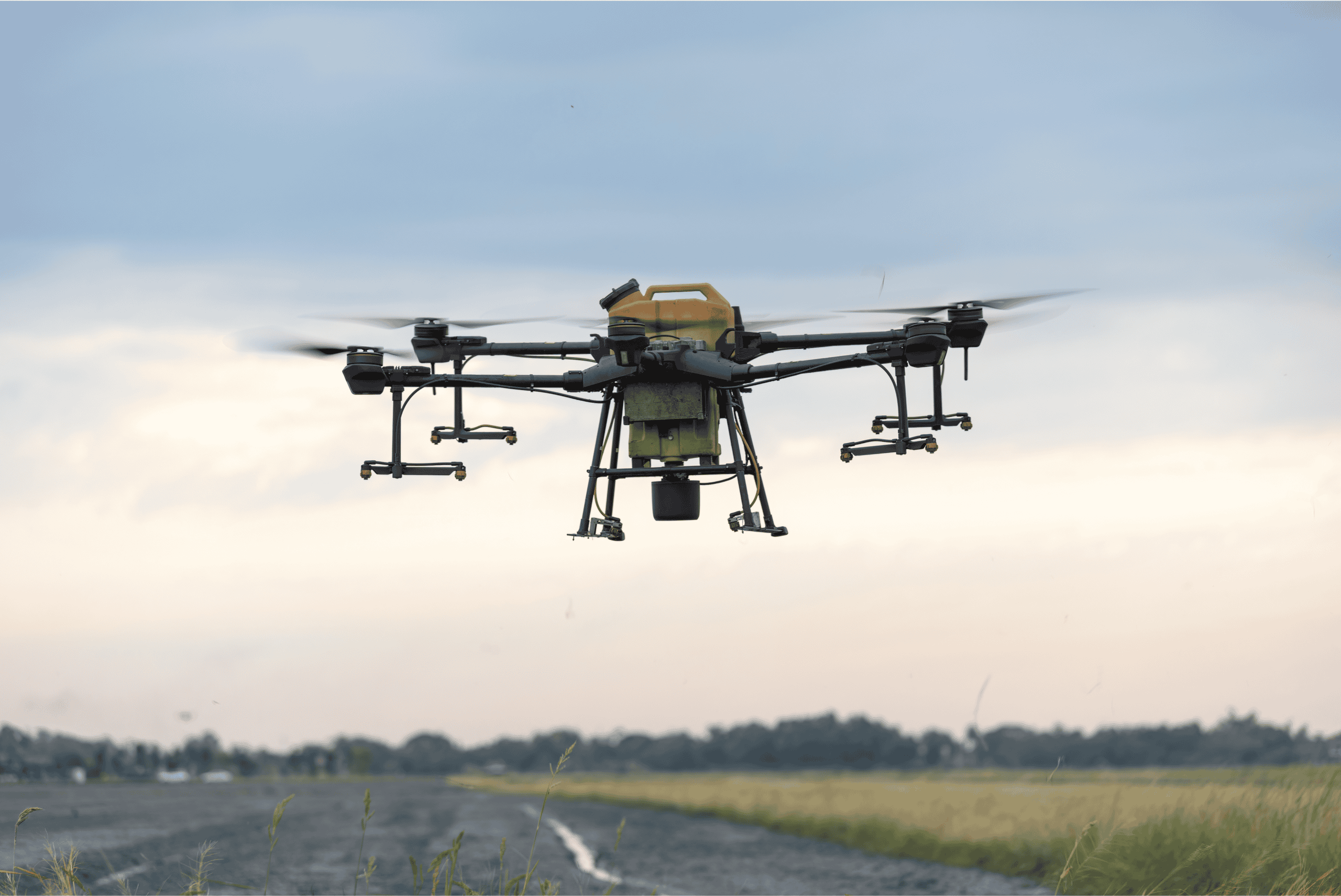
Job opportunities
On completion of the course, learners will be able to :
- or join a company that specializes in drone operations (inspection, audiovisual, security, industry).
- or move toward complex missions (BVLOS, urban operations, multi-drone coordination).
- or hold a position coordinating or supervising drone operations.
- or complete their training with other courses offered by the OpsForm training center.
Our training at a glance
The Drone Operations Agent training program is available as individual or group training. It can be customized and adapted to fit each participant’s schedule, whether in-person, online, or on-site at the workplace.
Practical information
Calendar
For whom?
Objectives
Prerequisites
Drone Operations Specialist Training Program
This training has been designed to be operational within an airline or airport company.
The OpsForm training center's policy is to keep up to date with the latest aeronautical regulations, new measures and recent events.
Educational section
The training is divided into several distinct modules designed to provide an in-depth understanding of each stage of a drone operation.
- Drone Regulations (EASA – Open / Specific / Certified)
- Operational tools (maps, planning software)
- Drone Technologies & Systems
- Advanced operations (BVLOS, complex missions)
- NOTAMs & Temporary Restrictions
- Meteorology for Drones
- Incident and Emergency Management
- Airspace & Drone Integration: Operational Messages
- Drone Mission Preparation
- Navigation & Planning (GPS / GNSS)
- Risk Analysis & SORA Method
- Human Factors & Drone CRM
To receive a detailed program, please contact us.
Assessment
Assessments are conducted throughout the training program to verify that participants have acquired the necessary skills:
- Multiple-choice questions (10 to 15 questions per module)
- Case Studies
- Practical exercises
- Final Exam
Our trainer
CEO, Co-Founder and Trainer OpsForm
Laurent has been a trainer in the aeronautics sector since 2012.
Previously, he held operational positions at the national level within the Department of Homeland Security, where he was responsible for establishing and managing aviation operations. He also worked as a national aircraft accident investigator and served as the national technical advisor for drones.
Since 2012, he has led training courses covering air operations agents, traffic agents, dangerous goods, ramp agents, ground handling agents, security agents, document fraud, and technical and judicial investigations related to aircraft accidents.
His teaching focuses on safety, regulatory compliance, and immediate operational readiness in airport and aviation environments.

Why choose OpsForm for your drone operations agent training?
Includes :
- Flight plan software and Amadeus Altea FM
- Amadeus certificate Authentic
Warranties :
- Qualiopi certification
- Meets air transport regulatory requirements
Advantages :
- Trainers with at least 15 years' experience
- Possibility of training on an aeronautics campus : Aérocampus Aquitaine
- Training also available in the Paris region or by distance learning
Financing :
- Payment in 4x at no extra charge
- Possibility of 100% reimbursement by Pôle Emploi, the Region or the OPCO
Solid training in aeronautics to boost your employability!
- Support right up to the moment you are hired: Our specialized team will be with you from the moment you register, obtain your certification and take up your new position.
- Level 4 professional qualification : At the end of your training, you'll obtain a professional qualification recognized by all airlines and airports. This diploma attests to your new skills and enables you to put them to good use on the job market.
- Qualiopi certification: All our training courses are Qualiopi-certified, guaranteeing the quality of our teaching and your funding from certain organizations.

Quality certification has been awarded for the following category of action:
TRAINING ACTION
The benefits of this program
Financing solutions
Many different types of professionals can benefit from this training: ground staff, reservation agents, security agents, safety agents, cashiers, insurance companies, banks, airlines, sensitive access companies, etc. In general, anyone whose daily duties involve handling identity documents and verifying their validity and authenticity will find this course particularly useful, as it will have immediate practical applications in their profession.
A wide range of financing options are available for your training project. 30% of the agreed price must be paid before the start of the course. The balance is payable throughout the course.
- Jobseekers: Ask your Pôle emploi or Conseil Régional advisor.
- Temporary workers: contact the Fonds d'Assurance Formation du Travail Temporaire (FAF.TT) for more information.
- Employees on permanent or fixed-term contracts : Currently in the process of obtaining Qualiopi certification, to benefit from the CPF.
Contractual terms and conditions
In accordance with article L6353-5 of the French Labor Code and article 1218 of the French Civil Codethe conditions for cancelling or abandoning the course are specified as follows:
In the event of cancellation by the beneficiary less than three 3 clear days before the start of the training session, or in the event of withdrawal during the session, the following provisions apply:
- Sums paid on account or in part remain the property of the training organization. No refund, total or partial, will be made.
- The outstanding balance may be invoiced up to a maximum of 40% of the total cost of the course, except in the case of duly justified force majeure.
- In exceptional circumstances, and at the request of the beneficiary, the training organization may offer a deferral to another session within the limit of available places and within a maximum period of one year.
- The sums due under this clause cannot be financed by public or joint funds (OPCO, France Travail, etc.) and remain the sole responsibility of the beneficiary.
Force majeure, within the meaning of Article 1218 of the French Civil Code, means external, unforeseeable and irresistible events that make it impossible for the beneficiary to participate, such as :
- Serious illness or accident with medical certificate,
- Death of beneficiary or close relative with death certificate,
- Natural disasters or major adverse weather conditions preventing travel, with proof,
- Unexpected administrative or judicial summons,
- Unexpected redundancy or job transfer with proof of employment.
Apart from these situations, any voluntary or unjustified withdrawal does not constitute a case of force majeure and entails the full application of the present provisions.